

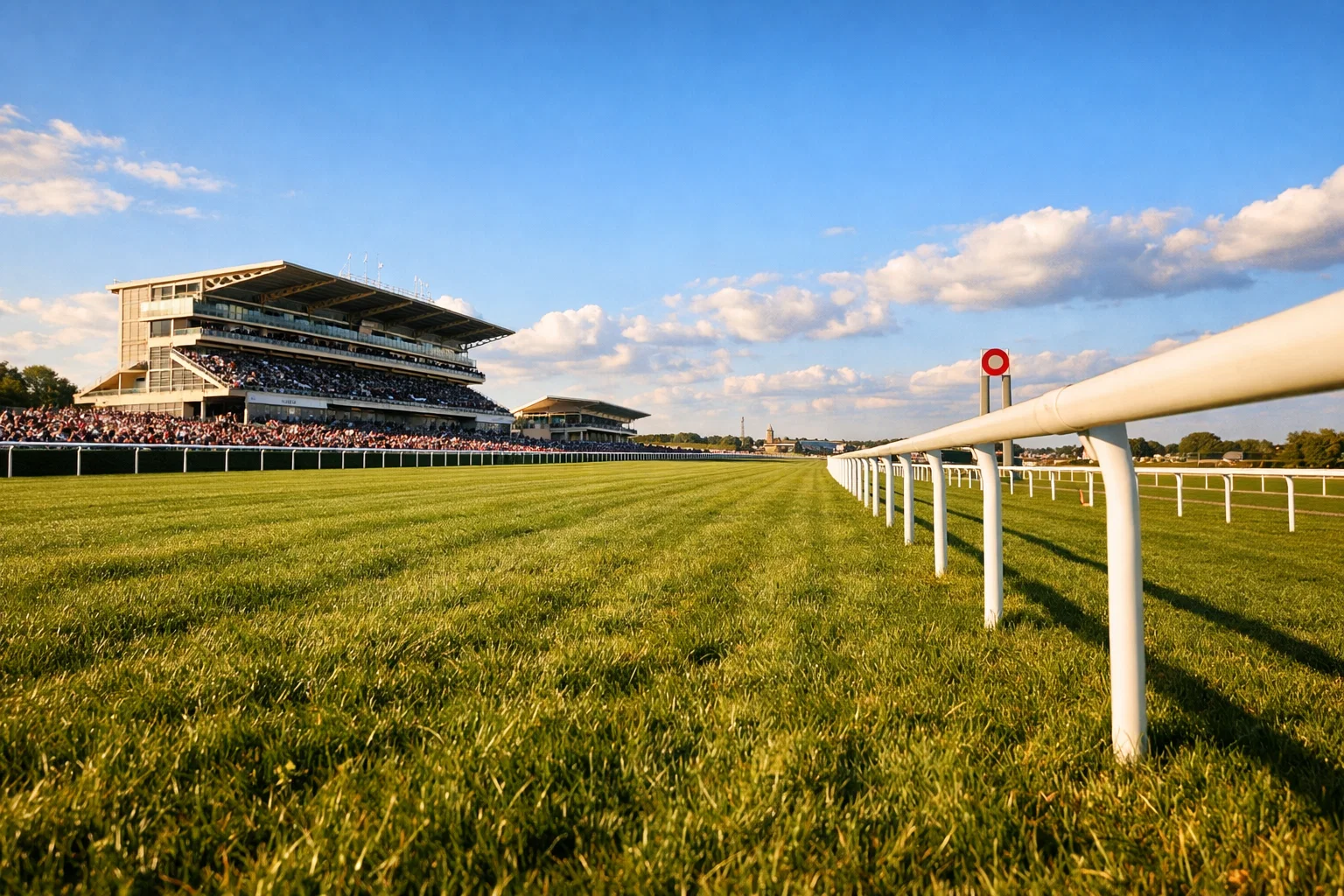
In September 2026, the world's oldest Classic will turn 250. The St Leger Stakes at Doncaster — one mile, six furlongs and 115 yards of Town Moor turf that has sorted pretenders from stayers since 1776 — remains the ultimate test of stamina in the British Flat calendar, and the final jewel of the Triple Crown. For punters, St Leger betting offers something rare: a Group 1 Classic where form analysis, trial-race data and a grasp of ante-post mechanics can genuinely sharpen your edge. This guide is built around that idea.
Doncaster Racecourse will mark the anniversary with a full-season celebration branded the "Festival of the Flat," spanning 35 fixture days across 2026. The centrepiece, as always, is the four-day St Leger Festival in September. Rachel Harwood, Executive Director of Doncaster Racecourse, has called the 250th running "a once-in-a-generation moment to celebrate centuries of sporting heritage at Town Moor." It is also, for those who study the numbers, a once-in-a-generation moment to capitalise on swollen fields, enhanced promotions and a market that rewards preparation.
What follows is not a bookmaker advert. It is a data-driven breakdown of odds, form patterns, trainer records, trial-race pathways and festival logistics — everything you need to approach the 2026 St Leger with the same seriousness the race deserves. Horse racing may be the UK's second-largest betting sport by gross gaming yield, with remote GGY of £766.7 million in the last financial year, but the St Leger is something apart — a race where history, heritage and handicapping collide.
St Leger Betting 2026: Key Info for the 250th Race
- The 250th St Leger Stakes runs at Doncaster in September 2026, carrying a prize fund of £700,000 and attracting the strongest staying three-year-olds in European Flat racing.
- Favourites have won half of the last 12 renewals, and 10 of 12 winners were in the top three of the betting — the market is a reliable but imperfect guide.
- Form recency is the single most powerful filter: seven of the last 12 winners had won their previous start, and nine raced within 65 days of the Leger.
- The Great Voltigeur Stakes at York remains the premier trial, producing four of the last 12 winners and 15 historical doubles with the St Leger.
- Aidan O'Brien has won three consecutive St Legers (2023–2025) — the first trainer to achieve that feat in the race's 249-year history.
The Race: Distance, Conditions & What Makes the St Leger Unique
Group 1 Classic — The St Leger Stakes is one of five British Classics, reserved for three-year-old colts and fillies. It carries Group 1 status, the highest tier in Flat racing, and is run under weight-for-age conditions with a 3lb allowance for fillies.
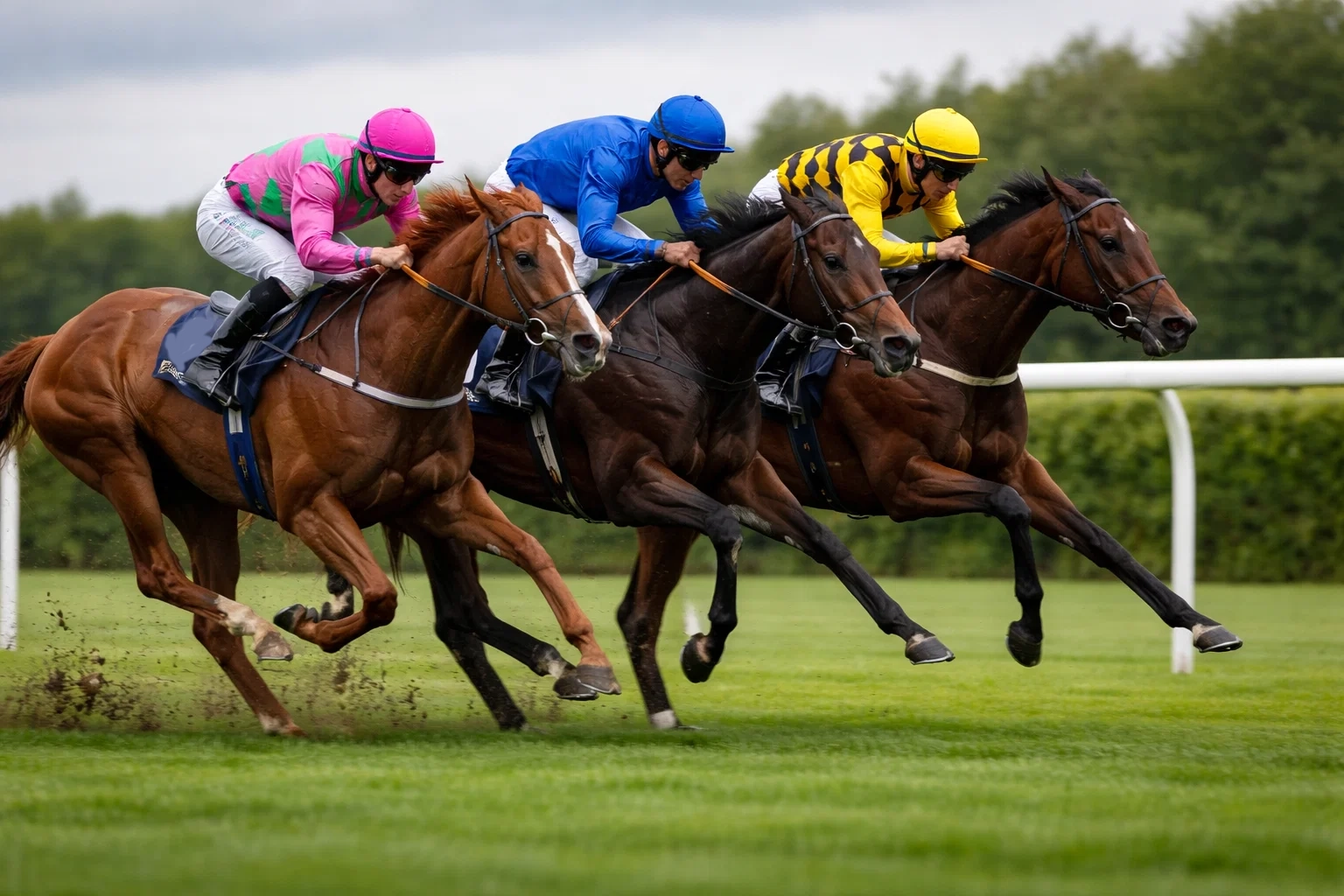
At one mile, six furlongs and 115 yards — approximately 2,921 metres — the St Leger is comfortably the longest of the five British Classics. The 2,000 Guineas covers a mile. The Derby stretches to a mile and a half. But the Leger adds another two furlongs on top, and those final furlongs on the straight, wide-open expanses of Town Moor are where speed gives way to raw stamina. Horses that flattered over shorter trips find nowhere to hide.
That distance shapes everything about the race's betting market. It rules out sprinters and milers entirely, narrows the field to confirmed stayers, and means that pedigree — specifically sire lines known for transmitting stamina — carries more weight here than in any other Classic. Trainers who target the St Leger are making a deliberate choice: they believe their horse stays. That conviction, or the lack of it, is readable in ante-post markets months before the race.
The race is restricted to three-year-olds, colts and fillies alike, though fillies have their own alternative in the Park Hill Stakes (the so-called Fillies' St Leger) on the same festival card. Entry involves a multi-stage nomination process with fees at each level, plus the option of a costly supplementary entry for late additions — a mechanism that itself provides a useful form clue, as we will explore in the ante-post section below.
Town Moor itself matters. Doncaster's course is left-handed, largely flat, with a long straight that rewards horses who travel strongly and finish honestly. Ground conditions in September vary — anything from Good to Firm through to Soft — and the going can shift decisively during Festival week. In 2025, Aidan O'Brien's Scandinavia handled soft ground to win comfortably; in 2019, Logician clocked a near-track-record on unusually quick terrain. The versatility demanded by Doncaster's drainage and September weather adds yet another layer to the punting puzzle.
One more historical footnote: in 2022, the St Leger was delayed by one day following the death of Queen Elizabeth II — a mark of the standing the world's oldest Classic holds within the national sporting calendar. The Leger is not just another Group 1. It is a 250-year-old institution, and it is treated accordingly.
St Leger in Numbers: Key Statistics and Market Trends
Numbers do not lie, but they do need context. The St Leger sits at the intersection of two opposing forces: a horse racing industry under structural pressure and a betting public that increasingly concentrates its money on the biggest events. Understanding both trends is essential if you want to bet intelligently on this race.
The Prize Fund and What It Signals
The St Leger's total prize fund in 2025 stood at £700,000, with £396,970 going to the winner. That places it firmly in the upper tier of British Flat races, though it trails the Derby (£1.5 million) and the King George. Within a broader context, British racing paid out a record £194.7 million in total prize money in 2025, a 3.5% year-on-year increase. Racecourses contributed £103.4 million of that, the Levy Board £63.2 million, and owners funded £26.8 million. The Leger's purse is competitive enough to attract serious runners, and that matters for market quality.
Attendance: The Live-Event Boom
British racing's overall attendance in 2025 reached 5.031 million — the first time the five-million barrier was broken since 2019 — with average daily attendance up 3.6% to 3,526. St Leger Day itself drew over 26,000 racegoers, an 11% jump on the prior year, while the first three days of the 2025 Festival attracted 48,469, a 12% increase. Festival-wide, attendance grew by 4.7%. The audience is not shrinking; it is shifting toward premium events.
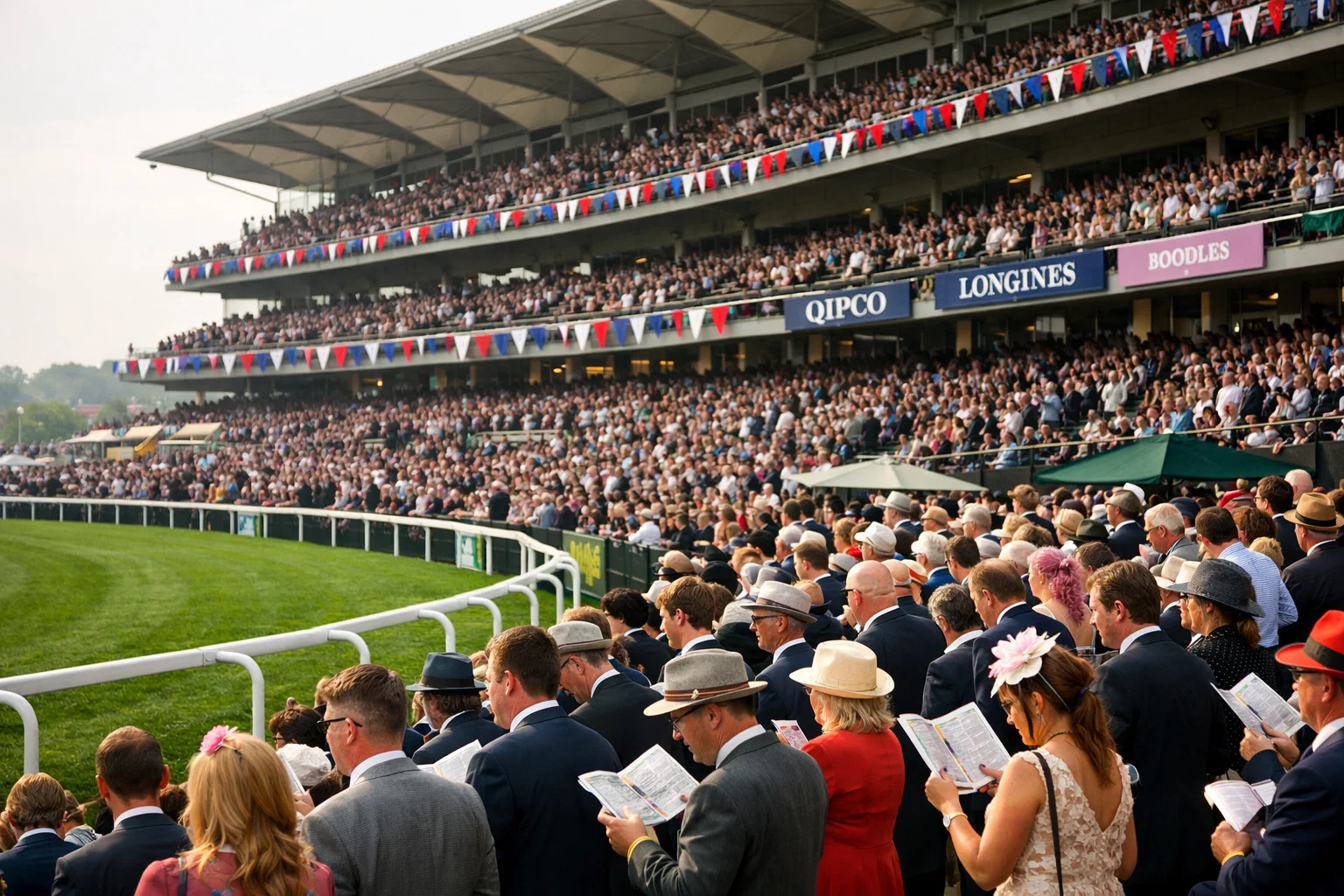
According to BHA data, 68% of ticket buyers at British racecourses in 2025 were casual or first-time visitors. For punters, the practical implication is straightforward: bigger crowds mean bigger pools, livelier on-course markets and, occasionally, more mispriced horses in the ring.
The Betting Market: Headwinds and Bright Spots
Here is where the picture gets more interesting. Overall betting turnover on British racing fell by 4.3% in 2025 compared with the prior year, and was down 10.7% against 2023, according to the BHA Racing Report. Online horse racing turnover dropped to £8.73 billion in the 2023–24 financial year, a decline of 16.3% from the £10 billion recorded two years earlier. Adjusted for inflation, the real drop was closer to 26%.
But averages mask the split. The BHA's quarterly figures show that average turnover per race at Premier Fixtures — the top-tier meetings that include the St Leger — actually rose by 2.7%, while Core Fixtures saw an 8.6% decline. Bettors are not abandoning horse racing; they are abandoning mediocre cards. The premium-event market is growing, and the St Leger sits squarely within it.
Richard Wayman, Director of Racing at the BHA, summarised the position in the 2025 Racing Report: "There has been much to celebrate — major events have delivered strong results — but the challenges around horse population and the betting environment remain real." For St Leger punters, the takeaway is that this race attracts sharper money, deeper liquidity and tighter margins than a midweek handicap at Wolverhampton.
Horse Population: Why Field Sizes Matter
The UK's active training population has been drifting downward at roughly 1.5% per year since 2022, standing at 15,070 horses as of March 2025. Fewer horses in training means smaller fields, and the St Leger is not immune: the 2025 renewal had just seven runners. A compact field changes your each-way calculations, your forecast perms and your overall approach to the market. We will return to field-size strategy later.
The macro story is clear: punters are concentrating their stakes on premium events like the St Leger, even as overall racing turnover declines. That concentration brings tighter markets, sharper competition and greater scrutiny of form — which means preparation, not instinct, is your edge.
Ante-Post Betting on the St Leger: How It Works
Ante-post betting — A wager placed before the day of the race, often weeks or months in advance. The key distinction: if your selection does not run, your stake is lost. There is no refund unless the bookmaker explicitly offers Non-Runner No Bet terms.
Ante-post markets for the St Leger typically open in early spring, once the first Classic trials begin to sketch out the staying division. By mid-summer, after the Derby and the early-season Group races, those markets start to tighten. By the time the Great Voltigeur at York is run in August, the ante-post market usually resembles something close to its final shape.
The appeal of ante-post betting is price. Odds available in March or April are almost always longer than what you will get on race day, because the market has not yet absorbed the information that trials, gallops and declarations will provide. If you identify a genuine St Leger horse early — say, a Derby runner with an obvious stamina pedigree who does not quite get home at Epsom — you can lock in value that evaporates as certainty grows.
The risk, of course, is withdrawal. A three-year-old targeted at the St Leger in May might suffer a setback in July. It might be redirected to the Prix de l'Arc de Triomphe, which clashes with the Leger in the autumn calendar. It might simply fail a trial and be retired for the season. In each case, your ante-post stake is gone. No run, no return.
The Entry Fee Structure as a Form Tool
The St Leger's nomination system works in three stages: an initial fee of £2,000, followed by £3,000 and then £2,000. Horses that miss early deadlines can still be added via a supplementary entry costing £50,000. That figure is not trivial. When a connection pays fifty thousand pounds to get a horse into the race at the last moment, it is a signal of genuine intent — and a data point that ante-post bettors should treat with the same weight as any piece of form.
Historically, supplementary entries have a respectable strike rate at this level. Trainers do not throw £50,000 at a horse unless they believe it has a realistic chance of recouping that fee from the purse. If a supplementary entry appears in the ante-post market and the price remains long, it is worth asking why.
How the Favourite Record Frames Ante-Post Risk
Over the last 12 renewals, the market has eventually settled on the right horse more often than not: 10 of 12 winners came from the top three in the betting. That reliability is useful for ante-post punters because it suggests the market absorbs information efficiently as the season progresses. The window of maximum value lies between the final key trial (usually the Great Voltigeur in August) and the declaration stage, when information is fresh but prices have not yet fully compressed.
Withdrawal risk — Ante-post betting on the St Leger means accepting that your stake rides on participation, not just performance. If your selection is withdrawn for any reason — injury, trainer decision, alternative target — the bet is lost. Always check whether your bookmaker offers Non-Runner No Bet terms on early St Leger markets.
Betting Strategy: Finding Value in the St Leger Market
Every punter wants an edge. In the St Leger, that edge comes from understanding three things: how the market is structured, what the form data consistently tells us, and where the bookmakers leave money on the table. Let us work through each one.
The Favourite Question
Six of the last 12 St Leger winners were sent off as favourite or joint-favourite. That is a 50% strike rate — high enough to respect the market but nowhere near high enough to bet blindly. More usefully, 10 of those 12 winners were among the top three in the betting. The message: the market narrows the field effectively, but you still need to separate the right horse from the short-priced wrong one.
St Leger Contender Checker
How well does your stayer fit the trends that win the oldest Classic?
The St Leger rewards proven stayers in form, not flattered milers with potential. Across recent renewals five signals do the heavy lifting: form last time, a recent run, the right trial route, market rank and stamina. Set your runner below.
For reference, recent St Leger winners averaged 4.3 of 5 of these signals and an 85 trends score. A high score is a filter, not a forecast — the race still has to be run.

Form Recency: The Single Most Reliable Filter
If there is one trend that consistently holds, it is this: St Leger winners come into the race in form. Seven of the last 12 winners had won their previous start. Nine of 12 had raced within 65 days of the Leger. And over a longer dataset, 29 of the last 33 winners had finished in the first three in their most recent outing. The pattern is blunt but powerful. Horses arriving at Doncaster on a losing run, or returning from a lengthy absence, almost never win.
This is not simply a statement of the obvious. It is an actionable filter. If a fancied horse was beaten four lengths in the Great Voltigeur, history says you can probably move on — regardless of how the Racing Post dresses up the excuses. The St Leger rewards horses in the form of their lives, not horses with potential waiting to be unlocked.
Each-Way Mechanics and Field Size
Field sizes matter for each-way punters. In 2025, the St Leger had just seven runners, meaning standard each-way terms were one-quarter the odds for the first three places. With eight or more runners, bookmakers typically pay one-fifth the odds for three places — a meaningful difference in payout. A compact field of six or seven also reduces the chance of an outsider sneaking into a place at a big price, which compresses each-way value.
With the UK horse population continuing to decline — roughly 1.5% per year since 2022 — smaller St Leger fields may become the norm rather than the exception. That shifts each-way strategy: in a seven-runner field, backing the second or third favourite each-way is less attractive than in a 12-runner Derby, where place terms are more generous and pace scenarios more variable.
Over-Round: What the Bookmakers Take
The average over-round (the bookmaker's built-in margin) in the St Leger across the last 20 years has been approximately 117%. The tightest market in recent memory was the 2024 renewal, at around 111%, while the widest was 2012 at 127%. A 117% book means the bookmaker's theoretical margin is roughly 17 percentage points — not the most competitive you will find, but well within the range where sharp bettors can find value if they price the race independently.
Where the real margin sits for you depends on how you bet. Exchange punters, who trade between themselves with a commission overlay, often face a tighter effective margin. Traditional fixed-odds bettors should shop across three or four bookmakers to shave that 117% down. Even small price differences compound over seasons.
Forecast and Tricast: When Exotic Bets Make Sense
With fields of seven or eight, straight forecast (first and second in the correct order) and tricast (first, second and third) bets carry lower combinatorial complexity than in larger-field handicaps. A seven-runner race yields 42 forecast permutations and 210 tricast combinations — manageable enough to consider a banker-led perm if you have a strong view on the winner and moderate views on the places. Combination forecasts and tricasts increase cost but reduce the precision required.
The economics of exotic bets in the St Leger are most compelling when the favourite is strong but the places are open. If the market says one horse wins but cannot agree on who finishes second and third, a forecast perm with the favourite on top and three or four place contenders underneath can return multiples of an outright single — for a manageable outlay.
The data points to a clear selection formula: back a horse that won or placed last time out, raced within the past two months, and is among the top three in the betting. Overlay this with trial-race form, trainer intent and going preference, and you have a framework that catches the winner more often than not.
Trial Races: Reading the St Leger Form Book
If ante-post betting is about identifying the right horse early, trial races are where that identification crystallises. The St Leger has a clearer trial structure than any other British Classic, and one race in particular stands above the rest.
The Great Voltigeur Stakes
Run at York in August over one mile and four furlongs, the Great Voltigeur Stakes is the premier St Leger trial. The distance is two furlongs shorter than the Leger itself, but the Knavesmire's galloping track and high-class opposition make it the best available test of a horse's readiness to stay a mile and six.
The numbers are emphatic. Fifteen horses in history have completed the Great Voltigeur–St Leger double, the most recent being Continuous in 2023. Over the last 12 St Leger renewals, four winners came via the Great Voltigeur route. No other trial produces anything close to that strike rate.
John Gosden, one of Britain's most successful trainers, has described the Great Voltigeur as "the right path" for a genuine St Leger candidate. The logic is simple: the Voltigeur tests staying ability against Group-level competition, under race-day pressure, with enough time before Doncaster for a horse to recover and sharpen. Trainers who bypass the Voltigeur and aim directly at the Leger from a lesser trial are, by implication, either supremely confident or working with a weaker hand.
The Gordon Stakes
Run at Goodwood in late July over a mile and four furlongs, the Gordon Stakes serves as an earlier signpost. It attracts Derby also-rans looking to step up in trip and lightly raced improvers. The form is useful but less reliable than the Voltigeur, partly because Goodwood's undulating track is nothing like Town Moor and partly because the race comes six weeks before the Leger — a lot can change in the interim.
The Irish Derby Connection
Several recent St Leger winners ran in the Irish Derby at the Curragh in late June. The Irish Derby is contested over a mile and a half, which gives a strong stamina clue, though the Curragh's right-handed track differs fundamentally from Doncaster's left-handed configuration. Horses who stayed on well through the final furlong at the Curragh without quite getting the trip are often rerouted to the Leger, where the extra distance plays in their favour.
For punters, the practical rule of thumb is this: treat the Great Voltigeur as the primary filter, the Gordon Stakes as a secondary data point, and the Irish Derby form as a stamina cross-reference. If a horse ticks two of those three boxes, it belongs on your shortlist.
St Leger 2026 Odds: How the Bookmaker Markets Work
Ante-post markets for the 250th St Leger will begin to take shape once the 2026 Flat season is underway. Early spring prices are speculative — based on breeding, stable reputation and the vaguest of trial entries — but they are also where the longest value is found. By mid-summer, after the Derby and the key trials, those prices will compress sharply.
Shopping for the Best Price
The difference between best and worst odds on the same horse can be significant — in the 2024 Leger, the gap between the best and worst available prices on the favourite exceeded a full point in fractional terms. Over time, consistently taking the best price across multiple licensed bookmakers is one of the simplest ways to improve your return on investment.
Over-Round in Context
As discussed in the strategy section, the St Leger's average book hovers around 117%. A quick way to gauge market competitiveness is to convert each horse's price into an implied probability and sum them. If the total is closer to 110%, the bookmakers are competing hard and you are getting a fairer deal. If it pushes past 120%, the margin is wide and exchange betting or best-odds-guaranteed offers become more important.
Starting price versus ante-post price is the other key distinction. Ante-post odds are fixed at the point of your bet — if you back a horse at 12/1 in April and it goes off at 5/1 in September, you keep 12/1. But if that horse does not run, you get nothing. Starting price (SP) bettors, who wait until race day, get the on-course market price and are refunded if the horse is withdrawn. The trade-off between price and security sits at the heart of St Leger betting.
Past Winners: St Leger Results 2006–2025
Form is pattern, and pattern is power. The table below covers two decades of St Leger results — winners, jockeys, trainers, starting prices and going conditions. Study it not for nostalgia, but for what it reveals about the type of horse, trainer and market dynamic that consistently produces winners at Doncaster.
| Year | Winner | Jockey | Trainer | SP | Going |
|---|---|---|---|---|---|
| 2025 | Scandinavia | T. Marquand | A. O'Brien | 2/1F | Soft |
| 2024 | Jan Brueghel | S. Levey | A. O'Brien | 11/4JF | Good to Soft |
| 2023 | Continuous | R. Moore | A. O'Brien | 6/4F | Good |
| 2022 | Eldar Eldarov | D. Egan | R. Varian | 3/1 | Good to Firm |
| 2021 | Hurricane Lane | W. Buick | C. Appleby | 8/11F | Good |
| 2020 | Galileo Chrome | T. Marquand | J. O'Brien | 8/1 | Good to Soft |
| 2019 | Logician | F. Dettori | J. Gosden | 4/7F | Good to Firm |
| 2018 | Kew Gardens | R. Moore | A. O'Brien | 7/1 | Good to Soft |
| 2017 | Capri | R. Moore | A. O'Brien | 4/1 | Soft |
| 2016 | Harbour Law | G. Baker | L. Mongan | 22/1 | Good to Soft |
| 2015 | Simple Verse | A. Atzeni | R. Varian | 8/1 | Good |
| 2014 | Kingston Hill | A. Atzeni | R. Varian | 9/4F | Good |
| 2013 | Leading Light | J. O'Brien | A. O'Brien | 7/2F | Good to Soft |
| 2012 | Encke | M. Barzalona | M. Al Zarooni | 25/1 | Good to Firm |
| 2011 | Masked Marvel | W. Buick | J. Gosden | 15/2 | Good |
| 2010 | Arctic Cosmos | W. Buick | J. Noseda | 12/1 | Soft |
| 2009 | Mastery | T. Durcan | Sir M. Stoute | 14/1 | Good |
| 2008 | Conduit | F. Dettori | Sir M. Stoute | 8/1 | Good to Firm |
| 2007 | Lucarno | J. Fortune | J. Gosden | 7/2 | Good |
| 2006 | Sixties Icon | F. Dettori | J. Noseda | 11/8F | Good to Firm |
What the Table Tells You
The jockey records across this span are instructive. Among currently riding jockeys, Ryan Moore leads with three St Leger wins from this 20-year window, all for Aidan O'Brien. Tom Marquand has two — in 2020 for Joseph O'Brien and in 2025 for Aidan O'Brien. Frankie Dettori, before his retirement, rode three winners in this period alone and ended his career with six St Leger victories, behind only Bill Scott (nine) and the joint-holders Lester Piggott and John Jackson (eight each).
The trainer column is dominated by one name, which we will examine in the next section. But note the variety of starting prices: from 4/7 (Logician) to 25/1 (Encke) and 14/1 (Mastery). The Leger can be won at a wide range of prices, though the recent trend skews heavily toward shorter-priced runners. Five of the last six winners went off at 4/1 or shorter.
Trainers & Jockeys: The Figures Behind the Form
You cannot bet the St Leger seriously without reckoning with Ballydoyle. Aidan O'Brien's dominance of this race is not just impressive — it is historically unprecedented.
O'Brien's Nine and the Three-in-a-Row
O'Brien has won the St Leger nine times, making him the most successful trainer of the modern era in this race. Only the Victorian-era John Scott, with 16 victories, sits ahead in the all-time record. O'Brien's most recent trio — Continuous in 2023, Jan Brueghel in 2024 and Scandinavia in 2025 — made him the first trainer in the race's 249-year history to win three consecutive St Legers. No one else has ever done it.
After Scandinavia's victory in 2025, O'Brien reflected on the achievement: he praised the horse's class and ability to handle soft ground, while noting that the decision on a possible Arc tilt would be made in consultation with owners Coolmore. That response was typically understated for a trainer whose broader record is anything but. O'Brien's career tally approaches 400 Group 1 victories, with 55 Irish Classics, 11 Epsom Derby wins and 10 successes in the 2,000 Guineas. When a Ballydoyle runner enters the St Leger market, the form book is only part of the picture. The trainer's intent — his willingness to target this race over the Arc — is itself a signal.
The Historical Trainer Record
Before O'Brien, the St Leger trainer record was dominated by John Scott, who operated from Malton in Yorkshire during the 19th century and saddled 16 winners between 1827 and 1863. No other trainer in history has more than nine. Behind O'Brien, the modern roll call includes John Gosden (three wins in this 20-year span), Roger Varian (three, including back-to-back in 2014 and 2015, plus Eldar Eldarov in 2022) and Sir Michael Stoute (two). The concentration of success at the top is striking: the St Leger is not a race where surprise trainers flourish.
The Irish Pipeline
O'Brien's dominance connects to a broader economic reality. The Irish racing industry, measured by a Deloitte study for Horse Racing Ireland, generated €2.46 billion in economic impact in 2022, supporting over 30,350 jobs. Ireland is the world's second-largest marketplace for thoroughbred sales, with public auction revenue of €538 million. That infrastructure produces horses with the depth of pedigree, the calibre of training and the competitive experience needed to win Group 1 races across the water. The St Leger has become a regular export destination for Ballydoyle, and the ante-post market prices O'Brien's runners accordingly.
For bettors, the practical question each year is not whether O'Brien will have a runner — he almost certainly will — but whether that runner represents value at the price, or whether the market has already baked in the Ballydoyle premium. When O'Brien has won three in a row, the fourth runner will likely go off shorter than the form alone warrants. That is where the value might lie elsewhere.
Jockeys to Watch
Ryan Moore has been O'Brien's principal weapon at Doncaster, riding three of the last 20 winners (Capri, Kew Gardens, Continuous). Sean Levey deputised to win on Jan Brueghel in 2024, and Tom Marquand stepped in for both Galileo Chrome in 2020 and Scandinavia in 2025 — his two victories for different branches of the O'Brien family give him an interesting stake in the race's future. William Buick has three (Arctic Cosmos, Masked Marvel, Hurricane Lane). Among retired riders, Frankie Dettori's six wins and Lester Piggott's eight remain benchmarks. The current generation of jockeys who handle high-pressure, stamina-sapping Group 1s over extreme distances is small. When you see a top rider committed to a St Leger mount weeks in advance, it speaks louder than any trial performance.
St Leger Festival 2026: The 250th Anniversary Programme
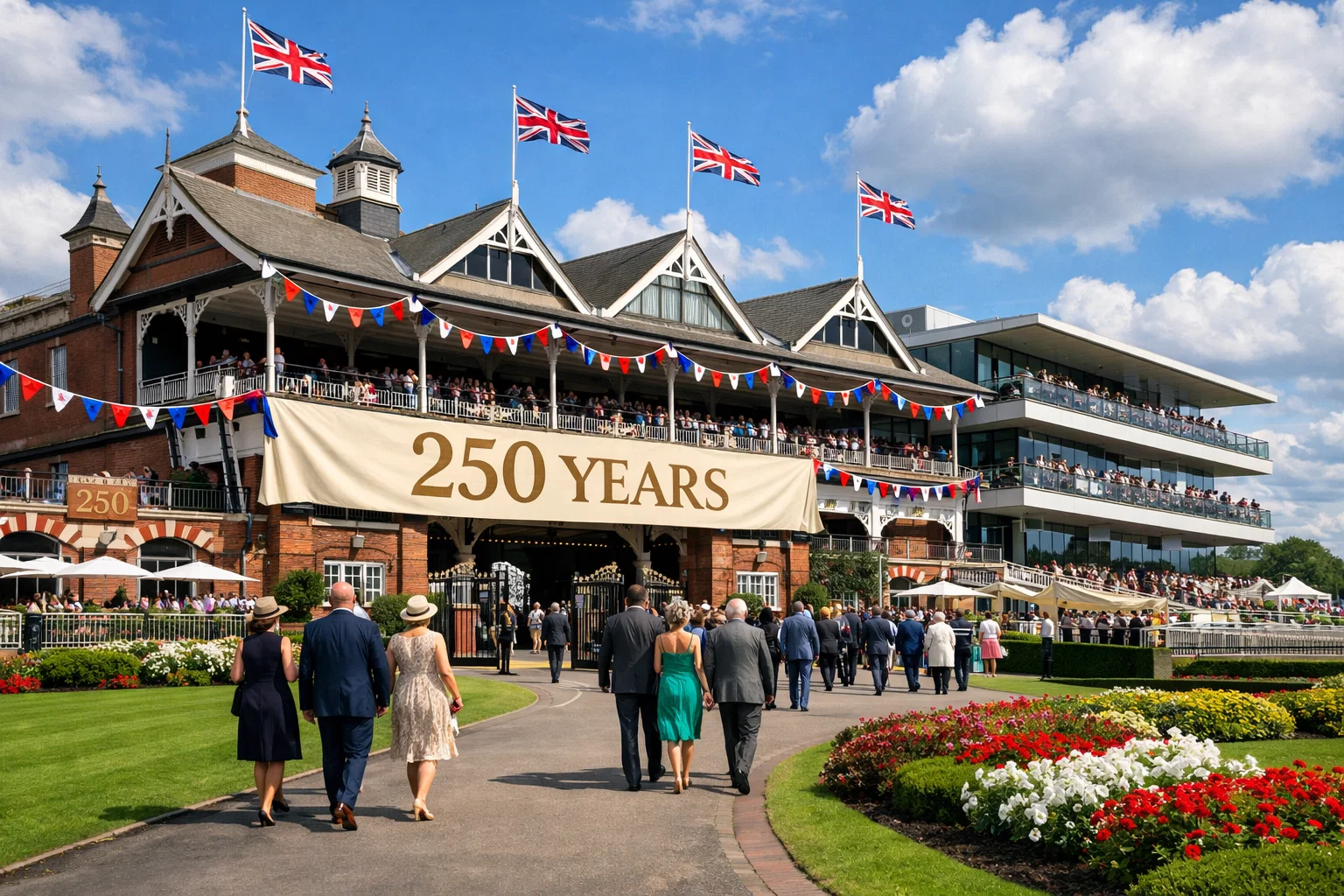
The St Leger is not just a race; it is a four-day festival that transforms Doncaster into the home of the world's oldest Classic every September. In 2026, the 250th anniversary will amplify everything — the crowds, the atmosphere, the card quality and, for punters, the range of betting opportunities across the undercard.
250 Years, 35 Fixture Days
To mark the milestone, Doncaster Racecourse has branded its entire 2026 season as the "Festival of the Flat" — 35 fixture days spread from spring through autumn. The flagship event remains the September festival, a four-day card running from Wednesday through Saturday, with the St Leger Stakes anchoring the Saturday programme.
In a nod to the race's founding year, Doncaster is offering a 17.76% discount on St Leger Festival 2026 tickets — a promotion that is unlikely to be repeated. General Admission starts at around £41, with County Enclosure at approximately £61 and four-day passes available from roughly £75. For anyone who was going to attend anyway, the maths on early booking is straightforward.
The Four-Day Schedule
The festival card typically runs as follows. Wednesday is Ladies Day, with the Park Hill Stakes (the Fillies' St Leger) as the centrepiece race. Thursday features the Doncaster Cup, one of Britain's oldest and most prestigious staying races. Friday's card includes the Park Stakes and the Portland Handicap, both strong betting heats. Saturday belongs to the St Leger itself, supported by the Champagne Stakes — a Group 2 two-year-old race that offers clues for the following season's Classics.
For bettors, the supporting races are not filler. The Portland Handicap regularly produces large fields, competitive markets and each-way opportunities that the main event, with its smaller field, may not. The Champagne Stakes is a forward-looking investment: the juveniles who contest it in September are the Classic contenders of the following spring.
Who Goes to the Leger?
The numbers back up that ambition. The 2025 festival set attendance records, with over 26,000 on St Leger Day alone and the wider event growing by nearly 5% year-on-year. David Armstrong, Chief Executive of the Racecourse Association, has noted that the figures "give cause for optimism" and that racing's unique blend of elite sport and social occasion continues to draw new audiences.
The Great British Racing campaign "The Going Is Good" contributed to the surge, driving a 60% increase in web traffic to racecourse websites and doubling the proportion of millennial visitors compared with 2024. The 250th anniversary in 2026 will only add to that momentum. For punters who prefer to bet on-course — and there are good reasons to, including access to the betting ring and real-time market information — this festival is one of the year's strongest options.
Frequently Asked Questions About the St Leger
How does ante-post betting work for the St Leger?
Ante-post betting means placing a wager before race day, often weeks or months in advance. The advantage is price: odds are typically longer early on because the market has not yet absorbed trial results, declarations and fitness updates. The risk is that if your selected horse does not start the race — whether through injury, a change in training plans or redirection to another target like the Arc — your stake is lost. There is no automatic refund unless the bookmaker specifically offers Non-Runner No Bet (NRNB) terms on the market. Ante-post markets for the St Leger usually open in early spring and tighten progressively after the Derby and the Great Voltigeur Stakes in August. The window of maximum value tends to fall between the final key trial and the official declaration stage, when information is fresh but the market has not yet fully adjusted.
What are the best trial races to assess St Leger form?
The Great Voltigeur Stakes at York in August is the premier St Leger trial. Fifteen horses in history have completed the Great Voltigeur–St Leger double, and four of the last 12 Leger winners came through this route. The Gordon Stakes at Goodwood in late July is a useful secondary indicator, attracting Derby runners stepping up in trip. The Irish Derby at the Curragh offers a strong stamina reference, with horses that stayed on well but could not quite get home at a mile and a half sometimes improving markedly over the Leger's extra distance. As a practical rule: the Voltigeur is your primary filter, the Gordon a supporting data point, and the Irish Derby a stamina cross-reference. Horses that perform well in two of these three races belong on your shortlist.
What is the Triple Crown and has anyone nearly won it recently?
The British Triple Crown consists of three races: the 2,000 Guineas (one mile, run at Newmarket in May), the Derby (one mile and four furlongs, Epsom in June) and the St Leger (one mile, six furlongs and 115 yards, Doncaster in September). A horse must win all three in the same season to claim the Crown. Only 15 horses have ever done it, and the last was Nijinsky in 1970. The closest near-miss in modern times was Camelot in 2012, who won the Guineas and the Derby but could only finish second in the St Leger, beaten three-quarters of a length by 25/1 shot Encke. The main reason the Triple Crown has become almost impossible is scheduling: the St Leger falls just weeks before the Prix de l'Arc de Triomphe, and most modern trainers prefer to skip Doncaster in favour of the more lucrative and internationally prestigious Arc. Until that calendar conflict changes, a 16th Triple Crown winner remains highly unlikely.
Betting Responsibly on Horse Racing
A guide to St Leger betting would be incomplete without addressing the environment in which that betting takes place. The UK's licensed gambling market is heavily regulated, but it exists alongside a growing black market that undermines both punter protection and the sport itself.
A 2024 report by Frontier Economics, commissioned by the Betting and Gaming Council, estimated that 1.5 million UK adults stake up to £4.3 billion annually on unlicensed gambling platforms — roughly one in 12 online bettors. Between 2021 and 2024, unique visits to unlicensed betting sites from UK IP addresses surged by 522%, according to data from the International Federation of Horseracing Authorities. A separate EY analysis for the BGC warned that further tax increases on licensed operators risk accelerating that shift toward unregulated platforms. Those platforms offer no responsible gambling tools, no self-exclusion options and no recourse if something goes wrong.
Use licensed bookmakers only. Licensed UK operators are regulated by the Gambling Commission and are legally required to offer deposit limits, cooling-off periods, self-exclusion via GAMSTOP and access to support services. Unlicensed sites offer none of these protections. If you or someone you know is affected by problem gambling, contact GambleAware (www.gambleaware.org) or call the National Gambling Helpline on 0808 8020 133.
Responsible betting starts with treating your stake as an entertainment cost, not an investment. Set a budget for the St Leger Festival, use the deposit limits your bookmaker provides, and never chase losses. The data in this guide is designed to sharpen your analysis, not to guarantee outcomes. No amount of form study eliminates the fundamental uncertainty of horse racing — which, of course, is precisely what makes it worth watching.
